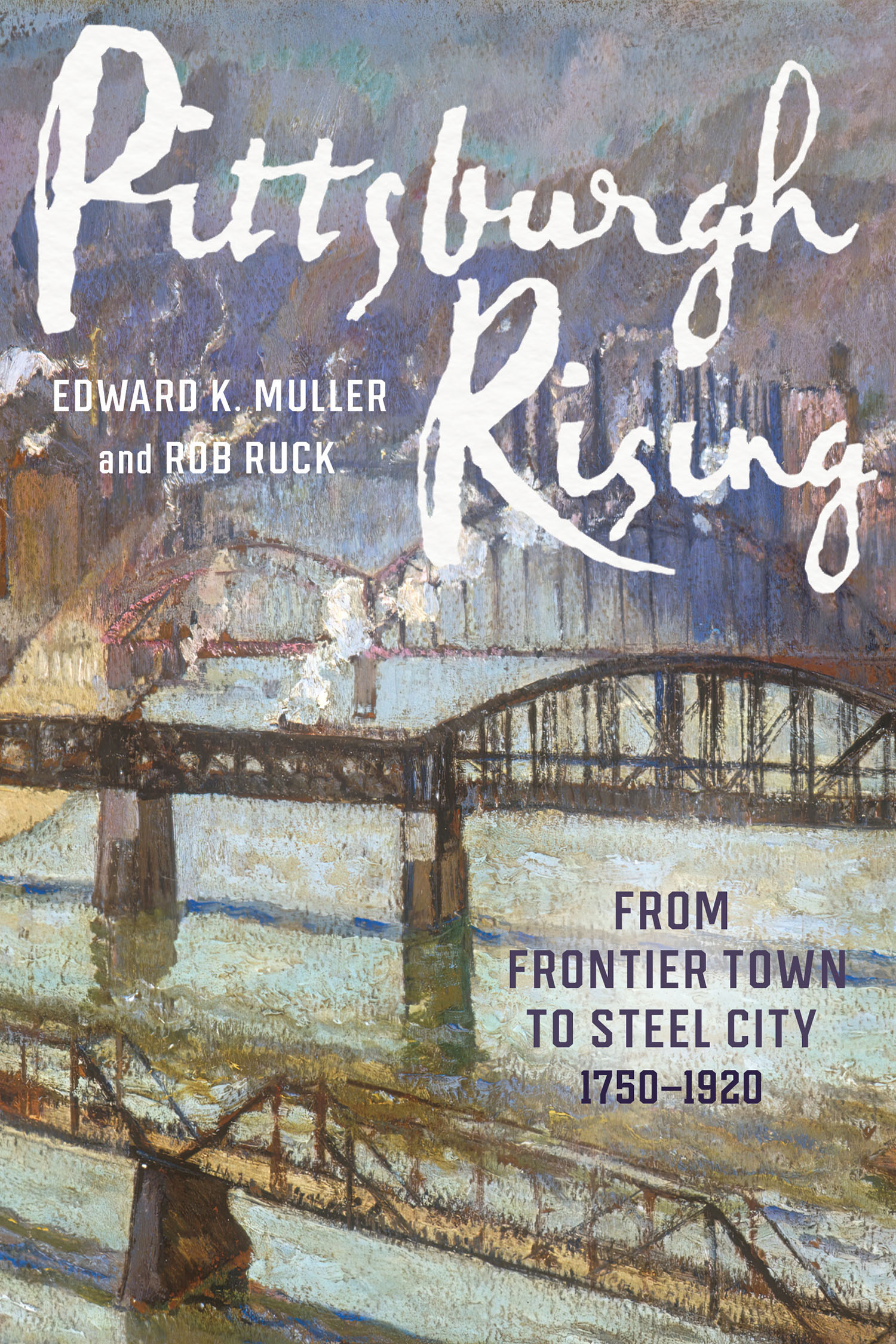
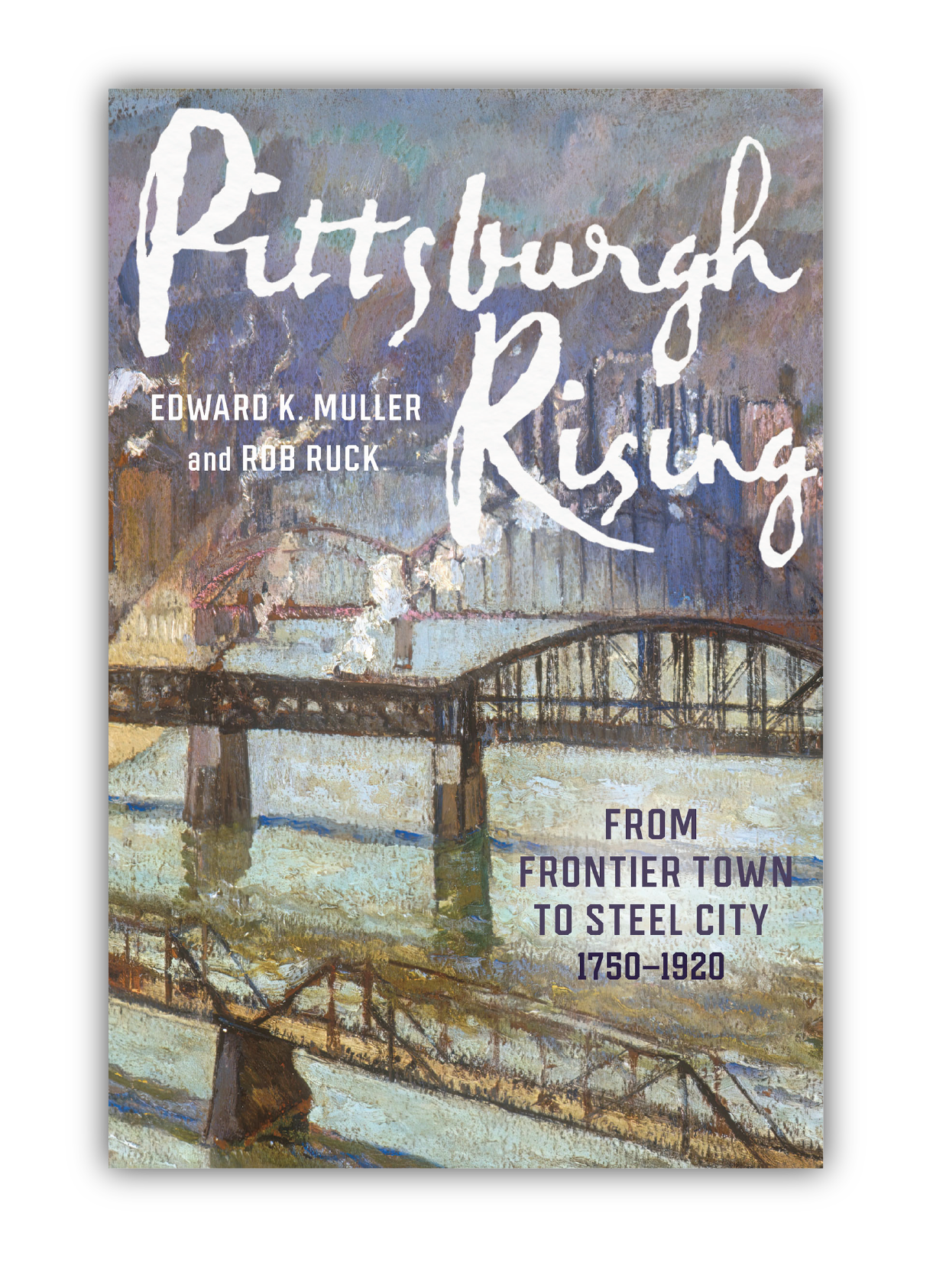
Pittsburgh Rising tracks the city’s evolution from the frontier town that came into being as a result of the great war for empire between England and France in the 1700s, through its reinvention as the Gateway to the West, emergence as the Iron City in the 1850s, and ultimately the Steel City.
Pittsburgh periodically confronted a succession of crises, but those turning points provoked people to step forward and seek solutions. When we looked at Pittsburgh’s past, we saw conflict and controversy as well as resiliency and underlying continuities. Every so often, Pittsburgh reinvented itself and when it did there were winners and losers. That reinvention was evident when deindustrialization walloped the region in the 1970s and ‘80s. The steel industry collapsed but the city navigated its way to an Eds and Meds economy.
Global forces shaped Pittsburgh, but its history was made by its people. That’s how we wrote Pittsburgh Rising, around the people who drove its history. Well known icons like Mellon, Carnegie, and Heinz left their fingerprints all over the city. But so did the people who built Pittsburgh with their labor, even if they hardly made it into the footnotes until the 1970s.
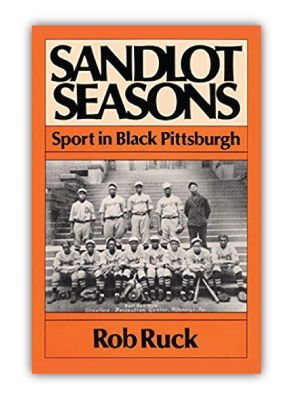
European immigrants and black migrants left little behind that could be celebrated on a par with Pittsburgh’s titans, but they laid the way for their descendants—who worked in mines and mills, along the rivers, and as domestic servants, textile hands, and office workers—to make Pittsburgh what it’s become, a city where people worked hard and played harder, part of the backbone of America.
Pittsburgh’s elites and those who struggled to make it through the day had little in common but were inextricably connected to each other. There’s no way to understand the city’s history by paying attention to only one group or the other. They both mattered. Understanding the trials and grit of previous generations, their capacity to change course and reinvent the city, offers guidance, even hope, for what lies ahead.